
















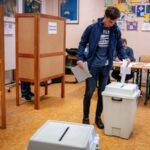

Political scientists cited by the Czech News Agency described the results as a success for the two opposition parties. The Christian Democrats’ performance was attributed in part to party leader Jan Grolich winning a first-round victory in the Senate elections, Anadolu Agency reported.
The Civic Democrats, the largest opposition party in the lower house, performed poorly. The three parties in the governing coalition — ANO, Freedom and Direct Democracy, and the Motorists — also had reasons to be disappointed. However, ANO leader Andrej Babis said the results demonstrated that his party remained the country’s strongest political force.
***
Five candidates secured more than 50% of the vote in Saturday’s Senate elections, winning their seats without needing a runoff. They included Grolich of the Christian Democrats, Jan Grulich of TOP 09, Jan Sobotka and Zbynek Linhart of the Mayors and Independents, and Tomas Fiala of Our Czechia.
Among candidates advancing to the second round for one-third of the Czech Senate’s 81 seats, the Mayors and Independents and ANO each secured 13 places, while the Civic Democrats won nine, with around 90% of votes counted.
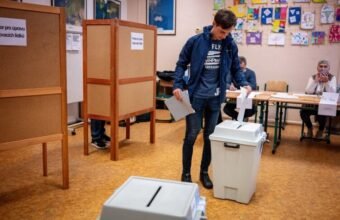
The Christian Democrats were the strongest party in the municipal elections, securing nearly 2,000 council seats, according to Radio Prague. They were followed by the Mayors and Independents, ANO and the Civic Democrats. Nationwide turnout was reported at 47%.
In Prague, the Mayors and Independents finished first with 23% of the vote, narrowly ahead of Together for Prague, an alliance of the Civic Democrats and TOP 09, which received 22%. Prague Together came third with 18%, while ANO finished fourth with 14%.
Petr Hlavacek, the Mayors and Independents’ lead candidate in Prague, ruled out forming a city government with ANO. He said his party would hold talks with Together for Prague, Prague Together and the Pirates in the coming days.
ANO finished first in six of the country’s 13 regional capitals.
The final political implications of the municipal elections will depend on negotiations to form local governing coalitions. The composition of the Senate will also remain uncertain until next weekend’s runoff elections.
Nearly 190,000 candidates competed for around 62,000 local council seats, while 154 candidates contested 27 seats in the upper house of parliament.