
























Connect with us

Latest

A 12-point gesture to Armenia: Is society not ready for peace?

Published

on

Azerbaijani singer Samira Afandi’s decision to give 12 points to Armenian singer Saro Gevorgyan at the “Silk Way Star” music festival in Astana, where she was a member of the jury, and her later act of hugging him, has sparked discussions on social media and television. Her actions have drawn considerable criticism.

In the final round, Samira Afandi gave 12 points not only to the performer representing Armenia but also to the participants from China, Georgia, Kazakhstan, Malaysia, Mongolia and Uzbekistan.

“Small bridges toward peace”

The singer explained her behavior on producer Tarikh (Tolik) Aliyev’s program titled “Tarixin bir günü”(A day in history). She said that everyone should build small bridges toward peace.

“As the daughter of a veteran, the granddaughter of a general and a citizen of this country, I believe the future is in the hands of the youth. Of course, we will not forget our history and we will not allow it to be forgotten.

I try to act in line with the peace policy led by the President. I believe that everyone who represents the country abroad and is in the public eye should build small bridges toward peace,” she said.

The singer stated that she did not always give high scores to the Armenian contestant during the competition.

“When it comes to music or education, this participant really performed very well. My decision to give him 12 points surprised everyone. I have no regrets. I was often stricter with him, but in the final round I gave the score he deserved.”

“The aim was to judge music, not take a political position”

Afandi emphasized that her purpose on stage was to evaluate music, not to express a political view.

“I look at this as a musician. I am not a politician who harbors hostility. I did not go there to express hostility but to represent my country.”

Despite mixed reactions on social media, the singer said that she stands by her actions.

“The gesture I made in the project was simply an act of humanity. I believe that music is a force that unites people and stands apart from politics.”

Akif Naghi, the former head of the Karabakh Liberation Organization and now chairman of the Free Homeland Party, insulted the singer for her action. Samira Afandi announced that she will sue those who insult her.

On August 8 of this year, the United States hosted the initialing of a peace treaty text between Azerbaijan and Armenia. According to the document, the parties recognize each other’s territorial integrity, commit to resolving disputed issues only through negotiations and withdraw all mutual claims.

Over the past month, representatives of Azerbaijani civil society have visited Armenia as part of peacebuilding efforts. Afterwards, Armenian civil society representatives visited Azerbaijan.

At a time when peace negotiations are ongoing, what does the negative reaction toward the Azerbaijani singer’s gesture indicate?

“It is wrong to politicize the results of a competition”

Composer Javanshir Guliyev told Meydan TV that it is wrong to use music competitions for political purposes.

Javanshir Guliyev. Photo: Facebook page

“I do not understand why a score given by a jury member in a competition should cause such an uproar. I consider it wrong to move the results of the competition into the political sphere. In my opinion, regardless of religion, race or nationality, the jury of any music competition must be extremely fair. Furthermore, with the peace agreement close to being signed and both Armenia and Azerbaijan moving toward this goal, we must adapt and as a society become used to this process.”

“This humane act should be appreciated”

Political analyst Zardusht Alizade says that anti Turkish propaganda in Armenia and anti Armenian propaganda in Azerbaijan have been shaped for many years under state influence.

Zərdüşt Əlizadə
Illustration: Meydan.tv

“To overcome these effects, time is needed. Curricula must be revised and the tone of media writing must change. Both Armenia’s and Azerbaijan’s constitutions clearly state that discrimination on religious, racial, gender and political grounds is prohibited. Unfortunately, little attention is paid to these universal values. A noble woman took a humane step. If someone does not like it, they can at least remain neutral. But criticizing or insulting her is unacceptable. In fact, such behavior should be welcomed. This woman has shown true nobility and culture. Instead of attacking her, people should support her. She should be congratulated and this humane gesture should be appreciated. She acted very beautifully and bravely.”

“People still view each other more as enemies than as neighbors”

Political commentator Rauf Mirgadirov says that neither in Azerbaijan nor in Armenia are people yet in a peace oriented mindset.
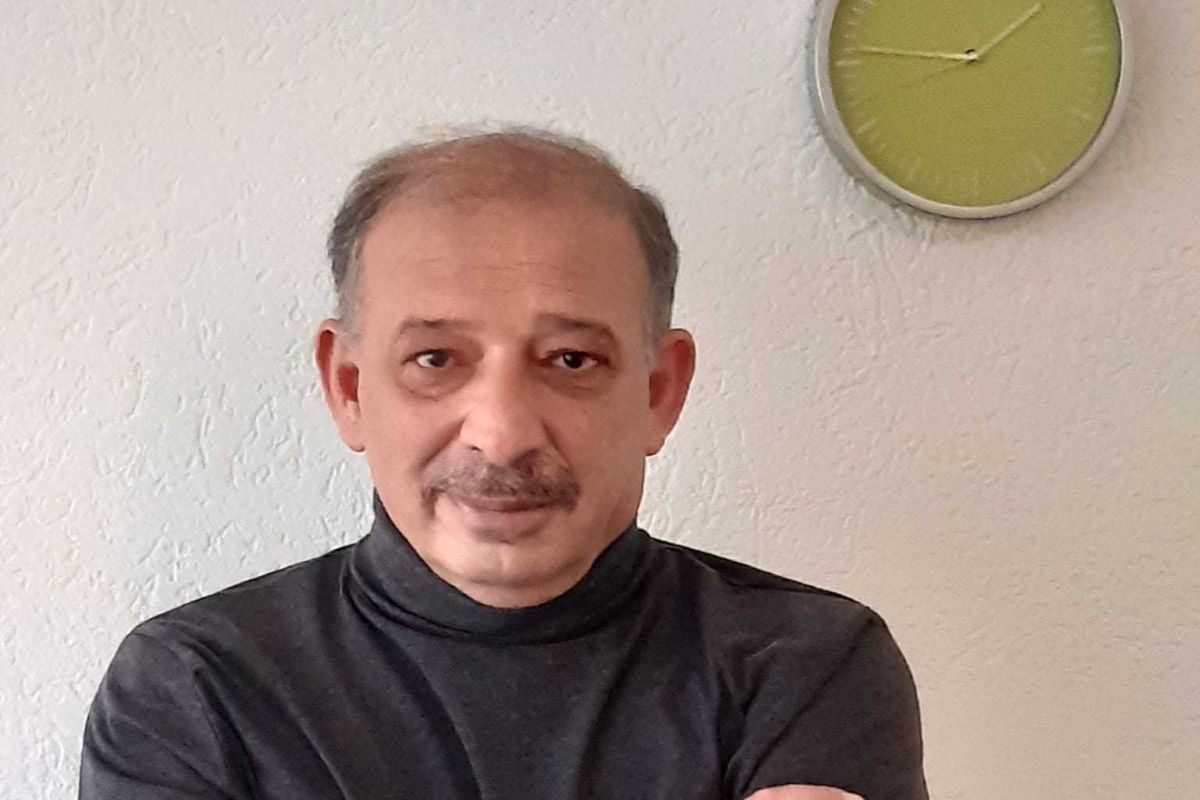
Photo: From personal archive of Rauf Mirgadirov

“We have lived under wartime conditions for nearly thirty years and the media on both sides has often spread propaganda based on hatred. Therefore it is wrong to punish people for their humane behavior. Everyone has personal choices. Some may hug, some may shake hands and some may choose not to greet at all. On both sides, people still view one another more as enemies than as neighbors.”

The analyst says that recent developments, including delegations traveling from Azerbaijan to Armenia and from Armenia to Azerbaijan, take place mostly under the supervision of the authorities.

“In such conditions, there is no intention to discuss the real causes of the conflict. Yet these issues are very serious. True peace does not come from simply signing a document and marking borders. Sustainable and lasting peace exists only when the causes that led to war are eliminated. These causes lie in attitudes, historical memory, interpretations of that memory, ways of thinking and deep rooted perceptions. This is not the first time this has happened in Armenian history nor in its relations with Azerbaijan. These matters must be discussed seriously. But it is wrong to attack someone who opens their arms to a person perceived as an enemy.”

The post A 12-point gesture to Armenia: Is society not ready for peace? appeared first on MEYDAN.TV.


Continue Reading

Latest

Azerbaijan’s president proposes broad amnesty initiative: Who could benefit?

Published

on

President Ilham Aliyev has proposed an amnesty initiative on the occasion of the “Year of the Constitution and Sovereignty.” Azertac reported on the initiative, noting that the amnesty is expected to apply to more than 20,000 people if adopted. The proposal has sparked wide public debate across Azerbaijan, with legal experts stressing that the figure does not automatically mean the release of 20,000 prisoners, as the application of amnesty is governed by strict legal criteria and limitations.

Legal framework: How the amnesty process works

Under Article 95 of the Constitution of the Republic of Azerbaijan, the authority to declare an amnesty lies with the Milli Majlis (Parliament). The President may only initiate the process by submitting a legislative proposal. Once introduced, the draft amnesty act is discussed in parliament and put to a vote.

According to legal expert Emin Abbasov, after the presidential initiative is formally submitted, parliament must vote on it within two months. In practice, initiatives originating from the Presidential Administration have never been rejected by the Milli Majlis, making the adoption of the amnesty highly likely.

Amnesty vs. Presidential Pardon

Although the terms “amnesty” and “pardon” are often used interchangeably, they represent distinct legal mechanisms.

A presidential pardon is granted by decree and applies to specific individuals. There are no legal restrictions related to the severity of the crime, meaning the President may pardon even those convicted of particularly serious offenses.

An amnesty, by contrast:

  • Is applied to categories of people rather than individuals;
  • Specifies particular articles of the Criminal Code;
  • Generally excludes those convicted of serious or especially serious crimes;
  • Is adopted by parliament rather than by presidential decree.

Through an amnesty act:

  • Individuals who have committed crimes but have not yet received a final court verdict may be released from criminal liability;
  • Sentences of convicted persons may be fully or partially reduced;
  • The unserved portion of a sentence may be replaced with a lighter punishment;
  • Criminal records may be cleared.

Key provisions of the draft amnesty act

The draft amnesty act provides for the release from punishment or criminal liability of individuals who participated in combat operations for the sovereignty and territorial integrity of the Republic of Azerbaijan, including the Second Karabakh War and the anti-terrorist operation conducted on September 19–20, 2023. The draft also applies to close relatives of those who were killed or went missing during these operations, as well as to individuals who became disabled as a result of Armenia’s military provocations against the civilian population. In addition, women, persons aged 60 and over, those who were minors at the time of committing a crime, and other categories of individuals are also covered by the amnesty act.

According to forecasts:

  • More than 5,000 convicts will be released from imprisonment;
  • The sentences of more than 3,000 individuals sentenced to imprisonment will be reduced;
  • More than 7,000 convicts will be released from sentences of restriction of liberty;
  • Nearly 4,000 individuals will be released from other or suspended sentences not involving imprisonment;
  • In addition, more than 1,000 people are expected to be released from criminal liability.

Crime Categories Under Azerbaijani Law

The Criminal Code of Azerbaijan classifies crimes into four categories based on their degree of public danger:

  • Crimes not posing significant public danger – punishable by up to two years of imprisonment or non-custodial penalties;
  • Less serious crimes – punishable by up to seven years of imprisonment;
  • Serious crimes – punishable by up to twelve years of imprisonment;
  • Especially serious crimes – punishable by more than twelve years of imprisonment or harsher penalties.

Historically, all amnesty acts in Azerbaijan have primarily applied to the first two categories.

Who could be covered by the new amnesty?

According to the draft currently under discussion in the Milli Majlis Committee on Legal Policy and State Building, excluding serious and especially serious crimes, the amnesty is expected to apply to the following categories:

  • Participants in combat operations for Azerbaijan’s sovereignty and territorial integrity, including the Second Karabakh War and the anti-terrorist operation conducted on September 19–20, 2023;
  • Close relatives of individuals killed or missing during these operations;
  • Individuals awarded orders and medals for military service;
  • Persons who became disabled as a result of Armenia’s military provocations against civilians;
  • Victims of the Khojaly tragedy, the January 20 events, deportations, and their close relatives;
  • Internally displaced persons;
  • Women;
  • Individuals who committed crimes before reaching the age of 18;
  • Persons aged 60 and over;
  • Persons with disabilities;
  • Individuals caring for minor or disabled children.

In addition, the amnesty may cover:

  • Those convicted of crimes not posing significant public danger;
  • Individuals sentenced to up to five years’ imprisonment for crimes committed through negligence;
  • Persons convicted of less serious crimes with less than one year remaining on their sentence;
  • First-time offenders convicted of serious crimes with less than six months remaining on their sentence;
  • Those sentenced to non-custodial or alternative punishments, including suspended sentences, community service, correctional labor, fines, or restriction of liberty.

Expected impact: What does “20,000 people” mean?

Lawyer Fariz Namazli stresses that the statement that the amnesty “applies to more than 20,000 people” does not mean all of them will be released from prison. The figure also includes:

  • Individuals whose sentences will be reduced;
  • Those released conditionally or on probation;
  • Persons released from criminal liability altogether.

Based on previous amnesties, those nearing the end of their sentences—typically with six months to one year remaining—are most likely to be released, while others may receive partial sentence reductions.

Political prisoners, journalists, and Armenian detainees

According to both Fariz Namazli and Emin Abbasov, individuals recognized as political prisoners by international organizations are unlikely to benefit from the amnesty, as most face charges classified as serious or especially serious crimes. This includes cases involving large-scale drug trafficking (Criminal Code Article 234.1-1), as well as journalists and activists charged with financial crimes, smuggling, or other serious offenses.

Although MP Agil Abbas expressed hope during a parliamentary session that imprisoned journalists might be included, legal experts note that such a move would not align with the legal framework governing amnesties.

Can Armenian prisoners be included in the amnesty?

Legal experts also state that Armenian prisoners held in Azerbaijan have been convicted of serious or especially serious crimes and therefore cannot be covered by the amnesty. Their release would only be possible through individual presidential pardons.

What’s behind the amnesty decision?

Emin Abbasov notes that behind such a large-scale amnesty there is not only a humanitarian approach but also practical necessities. According to the 2024 statistics of the Council of Europe:

  • Azerbaijan ranks 2nd in Europe in terms of the number of prisoners per 100,000 people;
  • 48% of the prison population has been convicted for drug-related crimes;
  • In recent years, the rate of recidivism has exceeded 28%.

These indicators show that there are serious problems in the penal and correctional system.

Thus, it can be said that this amnesty will mostly apply to those convicted of less serious crimes and those in the final stages of their sentences. For individuals recognized as political prisoners, journalists, and activists imprisoned on serious criminal charges, this decision will most likely not bring significant changes.

The post Azerbaijan’s president proposes broad amnesty initiative: Who could benefit? appeared first on MEYDAN.TV.

Continue Reading

Latest

Deportation order issued against Gultakin Hajibayli

Published

on

On December 15, a deportation order has been issued in Turkey for Gultakin Hajibayli, a member of the Coordination Council of the National Council, banning her from the country for five years.

She shared this information on her Facebook page. The politician addressed her appeal to Turkish President Recep Tayyip Erdogan and considers the decision against her to be unfounded.

“Despite having a two-year residence permit in Turkey and not violating any regulations to date, issuing such a decision against me is an injustice. The basis for this decision has not been explained,” she wrote.

Gultakin Hajibayli also stated that on November 29, she had filed a court appeal regarding her detention under special strict supervision in a deportation center in Turkey.

“I filed a court appeal regarding my detention under special strict supervision in a deportation center in Turkey since November 29 without any legal grounds. The fact that such a decision was hastily made without waiting for the court’s ruling indicates that this decision was not legal but political,” she said.

Hajibayli later noted that preparations were underway for her deportation to Azerbaijan.

“I want to inform that three days ago I was transferred from the Arnavutkoy Deportation Center, where I was initially held, to the Catalca Deportation Center. According to the information I have, detainees in this center usually stay for a shorter period. Therefore, I have the impression that preparations are being made for my forced deportation to Azerbaijan,” she stated.

She appealed to President Recep Tayyip Erdogan, urging Turkey not to support the Azerbaijani authorities in imprisoning their political opponents.

“Mr. President Recep Tayyip Erdogan, I still cannot believe that the state of Turkey, which I love with all my heart, consider my second homeland, and have always defended and promoted through my political activity, will trample on justice and law to forcibly send me to Azerbaijan to be imprisoned. Under no circumstances should Turkey support the Azerbaijani authorities, who have launched a war against democracy, in imprisoning their political opponents with fabricated charges. Any steps taken in this regard should take into account historical responsibility,” she said.

On November 29, police in Turkey took Gultakin Hajibayli from her residence and placed her under administrative control with G-82 code in the category of “foreigners posing a threat to national security.”

She considers this decision politically motivated and stated that she would be imprisoned if deported.

It is believed that Gultakin Hajibayli’s detention on November 29 was related to the arrest in Baku of the Azerbaijan Popular Front Party chairman Ali Karimli and Executive Committee member Mammad Ibrahim.

The post Deportation order issued against Gultakin Hajibayli appeared first on MEYDAN.TV.

Continue Reading

Latest

APFP member who wrote “Stalin” on Heydar Aliyev’s statue reportedly committed suicide in prison

Published

on

Elbay Karimli, a member of the Azerbaijan Popular Front Party (APFP) who was in custody, reportedly committed suicide on December 12 at the medical unit of Penitentiary Institution No. 2.

APFP told Meydan TV that Elbay Karimli hanged himself in the prison’s medical unit. The reason for the suicide is unknown.

The Ministry of Justice stated that an investigation is being conducted at the Khazar District Prosecutor’s Office regarding the death of Elbay Karimli.

Elbay Karimli was arrested in August 2023 after writing “Stalin” on a statue of Heydar Aliyev.

“Because I wrote ‘Stalin’ on the back of Heydar Aliyev’s statue, I am here today. At the police station, they told me, ‘Choose either drugs or weapons, or you will be charged with treason against the homeland. We will download pictures of military objects from your phone and accuse you of transmitting military secrets to Armenia or Iran.’ My throat went dry from what I heard. They said, ‘Don’t end up like Giyas, with 1 kilo taken from your house…,’” Elbay Karimli told his lawyer after being detained.

In 2024, the Baku Court of Grave Crimes sentenced him to six years in prison under the Criminal Code for possession of a large quantity of drugs with intent to sell.

Later, the Supreme Court reduced his sentence to five years by removing the element of intent to sell.

Currently, more than 20 members of APFP are in detention.

The party’s chairman, Ali Karimli, and Executive Committee member Mammad Ibrahim were arrested on December 1 and accused of attempting to forcibly seize power and change the constitutional order of the state. They were detained for 2 months and 15 days.

The party considers these arrests politically motivated.

The post APFP member who wrote “Stalin” on Heydar Aliyev’s statue reportedly committed suicide in prison appeared first on MEYDAN.TV.

Continue Reading

Trending

Copyright © 2008-2025 - AzeriTimes.com