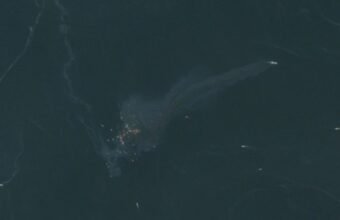










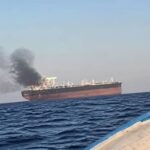











The incidents were reported on Saturday by Iran’s official IRNA news agency, which cited the IRGC. The names of the vessels and the origin of their cargo were not immediately available, Al Jazeera reported.
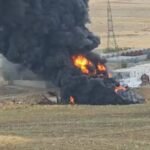
According to the IRGC, the first tanker struck a mine, triggering an explosion and a major fire. The second vessel also reportedly hit a mine and was engulfed in flames.
***
IRNA claimed that both tankers had switched off their positioning and radar systems before attempting to navigate a route that Iran had not authorised.
The IRGC further alleged that one tanker attempted to cross the strategic waterway with US support, while the second became immobilised. These claims have not been independently verified.
The reported incidents come amid escalating tensions over control of the Strait of Hormuz, a critical global shipping route through which approximately one-fifth of the world’s oil consumption passed before the US-Israeli war with Iran began in late February.
Tehran has since demanded that vessels obtain Iranian authorisation before transiting the strait. The United States, meanwhile, has imposed a naval counter-blockade targeting Iranian oil exports.
Earlier this week, IRGC Navy commander Rear Admiral Ali Azmaei warned that vessels deactivating their navigation systems would be considered hostile.
Iran’s army had also reported fires involving two tankers on Thursday and Friday in what Tehran described as a prohibited zone in the Gulf of Oman. Separately, maritime monitoring organisations reported that two tankers were struck in Gulf waters off Saudi Arabia on Friday.
According to maritime security firm Vanguard, the International Maritime Organization and the UK Maritime Trade Operations agency, six vessels were attacked in or near the Strait of Hormuz last Sunday, marking the highest daily number of reported attacks since the conflict began.
The growing disruption has significantly affected oil shipments through the waterway. Data from analytics firm Kpler showed that approximately 20.8 million barrels of oil transited the strait on October 8, compared with just 2.9 million barrels on October 11.
The decline in shipments has contributed to rising global energy prices and inflation concerns.
The latest reported tanker incidents underscore the risks facing commercial shipping as Washington and Tehran maintain competing restrictions on maritime traffic in the region.