






















The National Debt Management Centre (NDMC), which operates under Saudi Arabia’s Finance Ministry, has approached banks to assess their interest in a potential transaction, according to the sources, Bloomberg reported.
The discussions are at an early stage and the deal may ultimately not proceed. The NDMC did not immediately respond to requests for comment.
Saudi state-owned oil giant Aramco is also reportedly engaged in similar discussions with banks.
***
The potential borrowing comes as Saudi Arabia and other Gulf states face growing economic pressures from the regional conflict, which has disrupted shipping through the Strait of Hormuz, increased import costs and placed additional pressure on supply chains.
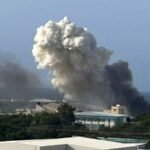
Iran has targeted Saudi energy infrastructure, while Iran-backed Houthi forces have threatened vessels in the Red Sea. The disruptions have complicated Riyadh’s efforts to reduce its dependence on the Strait of Hormuz by transporting oil from terminals located along the kingdom’s western coast.
Saudi Arabia’s economy contracted at its fastest rate since the pandemic in the second quarter, with the oil sector shrinking by nearly 25%, partly due to the attacks.
However, higher oil prices have provided some support for the kingdom’s finances. Brent crude has averaged around $87 a barrel this year, helping to offset part of the fiscal pressure created by the conflict. Saudi Arabia nevertheless posted a second-quarter budget deficit of 34.3 billion riyals ($9.1 billion).
The latest discussions come after the NDMC confirmed in May that it had completed its annual borrowing programme, securing around 90% of its financing requirements. The agency said any additional funding needs would primarily be met through private financing and domestic markets.
Saudi Arabia has emerged as one of the most active borrowers among emerging markets. The kingdom has raised about $6 billion through domestic and international bonds this year, while Aramco has secured an additional $4 billion. Saudi Arabia’s sovereign wealth fund raised $7 billion in May, in what was one of its first public-market transactions since the war with Iran began.
Late last year, the NDMC arranged a $13 billion, seven-year syndicated loan to finance power, water and public-utility projects. The move highlighted Riyadh’s increasing willingness to use non-market sources of financing to support Crown Prince Mohammed bin Salman’s economic diversification programme.
The growing shift toward external financing is also evident at Aramco. The oil company is pursuing a privatization strategy that could eventually raise as much as $35 billion. It has also said it plans to remain active in debt markets and introduce new financial instruments to attract a wider range of investors.
Saudi Arabia’s $900 billion Public Investment Fund is similarly seeking to rely more heavily on external capital under its new five-year strategy. The fund plans to accelerate the transfer of mature assets to private investors, pursue additional listings and divestments, and expand the role of external financing.
Despite the economic disruption caused by the war and efforts to reassess spending on major development projects, Riyadh continues to invest heavily in international ventures, ranging from gaming to electric vehicles. Most recently, it committed to a €6 billion ($7 billion) theme-park complex near Paris.