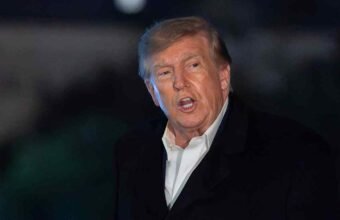














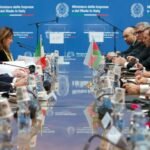











Iran’s Foreign Ministry spokesperson, Esmaeil Baghaei, early Thursday said that a planned round of talks between Iran and the United States in Switzerland on Friday has not yet been confirmed. However, US President Donald Trump said he signed a memorandum of understanding (MoU) with Iran, according to AP.
The White House also announced that Trump signed the agreement aimed at ending the conflict with Iran while he was at Versailles, although no media cameras were present during the signing.
“The Friday meeting was confirmed until a few hours ago, but when it was decided that the presidents of the two sides (Iran and the US) would sign the agreement, it was decided to pause consideration of the Friday meeting for now,” Reuters quoted Baghaei.
Quick answers to key questions
The purpose of the US-Iran peace deal is to end the ongoing conflict between the two nations, ensuring that Iran commits not to pursue nuclear weapons while receiving economic incentives.
Switzerland is hosting the signing of the peace deal as it has historically served as a neutral ground for diplomatic negotiations between Iran and the United States.
The deal will provide Iran with rights to sell oil, access a $300 billion development fund, and potentially recover frozen assets as part of the agreement.
The US will reinstate military action against Iran if the nation fails to honor the terms of the peace agreement, as emphasized by President Trump.
The MoU outlines commitments to cease military operations, negotiate a final deal within 60 days, and establishes provisions for Iran’s nuclear program and economic sanctions relief.
According to a US official, both Trump and Iranian President Masoud Pezeshkian signed the agreement. Earlier reports indicated that Trump and Vice President JD Vance had digitally signed the document on Sunday and that a formal signing ceremony would take place in Switzerland on Friday. However, AP citing an official speaking anonymously, said that Trump signed the deal in person at Versailles on Wednesday, and Pezeshkian also signed it the same day.
It remains uncertain whether the signing triggered a 60-day period for negotiating a final agreement. It is also unclear how Trump’s signing of the deal at Versailles differed from the digital signature he reportedly provided on Sunday.
Versailles has been the site of numerous landmark treaties throughout history, many of which ended wars or resolved territorial conflicts. The most notable was the 1919 peace treaty that formally concluded World War I. Some historians argue that the treaty’s severe penalties on Germany contributed to the conditions that later led to World War II.
Meanwhile, Trump and his administration had long pointed to several key issues as justification for taking a hardline stance toward Iran. However, during a press conference on Wednesday, Trump appeared to downplay many of those concerns.
‘It’s not our money’
While explaining his decision to support an interim peace agreement, Trump reiterated that Iran must never obtain a nuclear weapon. At the same time, he suggested that Tehran could retain the ability to enrich uranium, continue developing ballistic missile technology, and regain access to billions of dollars in previously frozen assets.
“The unfreezing… we have taken a lot of their money. And we have their money. We have taken their money, it’s not our money, it’s their money. And we froze it. At a certain point in time, I guess we’re going to have to give it back. You know, if we didn’t give it back, nobody would ever invest in the dollar again,” Trump said, as per ANI.
Trump indicated that although keeping the funds might seem politically advantageous, such a move could undermine confidence in the US financial system over the long term and potentially damage its credibility.
“I thought about it. I’m not the most perfect person. I said, ‘What if we keep their money? What the hell are we giving it back to them?’ But people from lots of nations, some nations we don’t agree with, they have their money, the dollar’s become very strong under me, and they don’t want to have a little conflict with somebody and end up having the United States just take their money,” he said.
“So if you do that, you really don’t have a system,” Trump added.
These three issues have been central to international debates over Iran for years, particularly since the 2015 nuclear agreement reached between Iran, the United States under former president Barack Obama, and other world powers to curb Iran’s nuclear activities, as per Bloomberg.
Trump had often pointed to these same issues as evidence that Obama and previous US presidents had been ineffective in dealing with Iran, mentioning that their policies failed to adequately contain the threat posed by the government in Tehran.
About the Author
Garvit Bhirani
Garvit Bhirani is a journalist based in Gurugram. He is a Deputy Chief Content Producer at LiveMint, where he covers national and international news stories, focusing on accuracy and compelling storytelling for readers.
With a total of six years of experience in journalism, he has previously worked with Vaco Binary Semantics for Google, taking on the role of news curation lead, and reported from the field on health, education, and agriculture stories for 101reporters and News9. He has also served as a content editor for entertainment and news media organisations.
Garvit holds bachelor’s and master’s degrees in journalism and mass communication from Guru Gobind Singh Indraprastha University and Gurugram University, respectively. During college days, he joined India’s only non-profit student journalism network, where he anchored daily news updates and produced his own weekly show called ‘Data Fix’.
He was selected for the YES Foundation Media for Social Change Fellowship in Delhi, the Talking Data to the Fourth Pillar residential workshop, and the VOICE Fellowship in Pune.
He holds certificates in COVID-19-verification reporting, data journalism, food & agriculture, tech policy, media literacy and countering misinformation, and tackling election disinformation courses from Thomson Foundation, IndiaSpend, The Dialogue, US Mission in India, and AFP.
He can be reached on LinkedIn or on @garvitbhirani on X