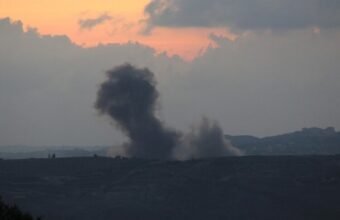

















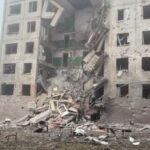

According to the Komala Party and the HANA Human Rights Organization, nine members of the group were killed and two others injured in the attack near Sulaymaniyah, News.Az reports.
Table Of Content
***
The incident has also sparked legal questions over whether those targeted were lawful military objectives under international humanitarian law and whether the strike complied with the rules governing armed conflict.
What happened in the reported missile strike?
According to the HANA Human Rights Organization and the Komala Party of Iranian Kurdistan, Iranian missiles struck several Komala camps and facilities in the Zargwezle area near Sulaymaniyah in Iraq’s Kurdistan Region at around 6:00 a.m. local time on July 17.
The organizations said nine members of the group were killed, while two others were injured, one of whom was reported to be in critical condition. Komala identified those killed as members of its Peshmerga forces and released their names, although it did not provide additional information about the wounded.
At the time of reporting, Iranian authorities had not publicly commented on the alleged strike or officially confirmed responsibility. Independent verification of casualty figures and operational details remained limited.
The reported attack is the latest in a series of cross-border military operations targeting Iranian Kurdish opposition groups based in northern Iraq, an area that has repeatedly witnessed missile and drone strikes in recent years.
Who is the Komala Party of Iranian Kurdistan?
The Komala Party of Iranian Kurdistan is an Iranian Kurdish opposition organization that has operated for decades and has long opposed the government in Tehran. Over the years, parts of the organization have maintained armed units, often referred to as Peshmerga, while also engaging in political activities.
Many of Komala’s facilities are located in Iraq’s semi-autonomous Kurdistan Region, where several Iranian Kurdish opposition groups have established bases after leaving Iran. Tehran has repeatedly accused these organizations of carrying out armed activities and supporting unrest inside Iranian territory.
Komala rejects many of Iran’s allegations and describes itself as a political movement defending Kurdish rights. The organization says its camps have been repeatedly targeted by Iranian missile and drone strikes, reporting that nearly 40 attacks have occurred since the beginning of what it refers to as the “39-Day War.”
The group’s presence in northern Iraq has remained a source of tension between Iran, Iraq and the Kurdistan Regional Government for many years.
Why are legal questions being raised about the strike?
The HANA Human Rights Organization emphasized that the legality of the reported strike cannot be determined solely by describing those killed as “Peshmerga” or members of Komala. Under international humanitarian law, whether an individual may lawfully be targeted depends on factors such as continuous combat function or direct participation in hostilities at the time of the attack.
According to HANA’s preliminary findings, several of those killed had only recently joined the organization, and the group said it had found no verified evidence that they had assumed continuous combat roles or were directly participating in hostilities when the strike occurred.
The organization stressed that determining the lawfulness of the attack requires assessing several factors, including whether the targeted facilities constituted legitimate military objectives and whether the operation complied with the principles of distinction, proportionality and precaution under international humanitarian law.
These legal principles require parties to armed conflicts to distinguish between military targets and civilians, avoid excessive civilian harm in relation to anticipated military advantage and take feasible precautions to minimize civilian casualties.
Why is the location of the strike important?
According to HANA, the Komala camps targeted in Zargwezle are located near civilian-populated areas. This raises additional legal considerations because military operations conducted close to civilian communities require careful assessment of the potential risks to non-combatants.
Human rights organizations argue that any independent investigation should examine the type of weapons used, the timing of the strike and whether alternative means could have achieved the intended military objective while reducing the risk to civilians.
The proximity of military facilities to civilian infrastructure is a recurring issue in modern conflicts, particularly where armed groups operate near populated areas. International humanitarian law requires commanders to consider foreseeable civilian harm when planning attacks.
HANA also referred to previous Iranian cross-border military operations, arguing that concerns regarding compliance with international humanitarian law warrant independent scrutiny whenever such strikes occur.
What could happen next?
HANA has called for a prompt, independent, impartial and transparent investigation into the reported strike. According to the organization, investigators should establish the precise circumstances of the attack, determine the legal status of those killed and assess whether the targeted facilities qualified as legitimate military objectives.
The organization has also urged the International Committee of the Red Cross (ICRC), the United Nations and other international bodies to monitor the incident and support efforts to establish the facts.
HANA noted that if an independent investigation were to conclude that civilians or other protected persons had been intentionally targeted, or that expected civilian harm was excessive compared with the anticipated military advantage, such findings could indicate serious violations of international humanitarian law and potentially amount to war crimes.
At present, however, these legal questions remain unresolved. Without an independent investigation and official findings, the circumstances of the reported strike, the status of those killed and the legality of the operation remain matters of ongoing dispute.