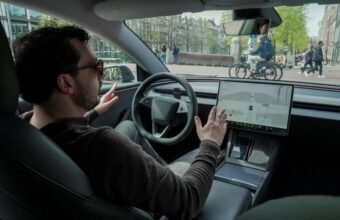
















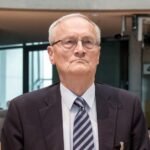



German Transport Minister Steffen Bilger said he would advocate for the prompt approval of Tesla’s “Full Self-Driving” system across the EU after discussions with the company over technical and liability issues, Reuters reported.
Musk welcomed the German government’s position on Wednesday, responding “Danke schoen” on his social media platform X to Bilger’s comments.
***
Bilger said Germany had reached an agreement with Tesla that would allow the system to exceed posted speed limits by up to 10%. Berlin also plans to support that approach during the wider European approval process.
The speed issue has become one of the main obstacles to EU approval. Safety advocates and some regulators have argued that Tesla should remove a function allowing its vehicles to travel above posted speed limits before the technology is authorized more broadly.
Tesla’s European version of the system, which was approved by Dutch regulators earlier this year, excludes some features available in the United States. However, it retains a speed-offset function that can increase a vehicle’s maximum speed to as much as 50% above the detected speed limit.
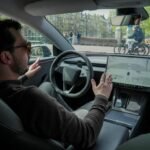
Bilger also said Tesla had offered to rename the system “Tesla Assisted Driving” to address concerns that the current “Full Self-Driving” name could give drivers the impression that the vehicles are fully autonomous.
“My goal is for Tesla drivers to be able to enjoy the benefits of ‘assisted driving’ throughout the EU without delay,” Bilger said.
Tesla’s driver-assistance technology still requires drivers to remain responsible for the vehicle, despite its current branding.
Germany is the latest European country to support Tesla’s efforts, following backing from countries including the Netherlands and Belgium. Other EU members, however, remain cautious.
Sweden and France have raised concerns over the system’s ability to exceed speed limits, while an EU vote on approval that had been expected in October has been delayed until at least December as some countries conduct additional testing.
The developments come as Tesla intensifies efforts to secure regulatory approval for the technology across Europe. The company has argued that its driver-assistance system can improve road safety, while safety researchers have challenged the evidence behind some of Tesla’s claims.
Seven traffic-safety researchers who examined Tesla’s methodology for Reuters said the company’s research does not provide sufficient evidence to support its safety claims. They said Tesla’s European research does not directly assess crash rates or traffic deaths, instead relying on driving behaviours such as hard braking and horn use as indicators.
Reuters has also reported that Tesla has conducted an aggressive lobbying campaign aimed at securing EU approval for its technology. The company has pressed regulators over the scope of safety reviews, promoted its own safety research and used social media to encourage supporters to call for faster regulatory approval.
Tesla is seeking wider approval as it attempts to strengthen its position in the European electric-vehicle market, where competition from Chinese manufacturers has intensified. The company’s first European factory is located near Berlin, making Germany a particularly important market for Tesla’s operations in the region.