



















The fighting erupted in Rumbek, the capital of Lakes State, on Friday, October 9, 2026, following earlier confrontations between armed groups from neighboring communities. Government officials said the preliminary death toll could rise as authorities continued assessing casualties and investigating the circumstances surrounding the violence.
Table Of Content
- What happened in Rumbek and how did the clashes leave 71 people dead?
- What triggered the violence between rival communities in Lakes State?
- How has the South Sudanese government responded to the deadly fighting?
- Why does intercommunal violence continue despite South Sudan’s peace agreement?
- Could the Rumbek clashes threaten South Sudan’s political transition and upcoming elections?
***
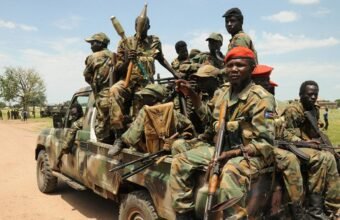
Security forces, including military, police and intelligence personnel, were deployed to restore order after fighting spread into residential neighborhoods and forced families to flee.
The latest bloodshed has renewed concerns about longstanding communal rivalries, the widespread availability of weapons and the fragility of South Sudan’s security institutions.
The violence also comes at a politically sensitive moment as the country prepares for national elections following years of delayed political reforms and an increasingly fragile peace process.
News.Az examines what triggered the clashes, why communal violence remains widespread, how authorities have responded and what the latest crisis means for South Sudan’s stability.
What happened in Rumbek and how did the clashes leave 71 people dead?
The latest violence erupted in and around Rumbek, the administrative capital of South Sudan’s Lakes State, on October 9, following an earlier confrontation in Nyangkot village on the outskirts of Rumbek Central County.
According to local reports, fighting initially broke out on Thursday between armed youths from the Nyang and Pakam communities, leaving four people dead.
The confrontation escalated during the early hours of Friday, when armed groups moved into Rumbek and exchanged heavy gunfire.
Local media reported that the fighting spread into residential neighborhoods, causing panic among residents and forcing families to seek shelter in surrounding villages.
The Ministry of Information, Communication Technology and Postal Services said preliminary security assessments indicated approximately 71 fatalities.
However, officials emphasized that the exact number of deaths and injuries had not yet been independently verified.
Among those killed were four government soldiers, including a captain and three non-commissioned officers.
Witnesses told AFP that armed individuals from outside Rumbek attempted to seize control of parts of the town and temporarily succeeded before government reinforcements arrived.
The attackers subsequently withdrew, although reports indicated that fighting continued beyond the town’s boundaries.
The violence represents one of the deadliest recent outbreaks of communal conflict in Lakes State and has prompted urgent calls for restraint.
What triggered the violence between rival communities in Lakes State?
The immediate confrontation reportedly involved armed youths from the Nyang and Pakam communities, whose clashes began in Nyangkot village before spreading into Rumbek.
Local reporting indicates that the initial fighting left several people dead, contributing to the rapid escalation of violence the following morning.
However, the precise trigger of the latest confrontation has not been conclusively established by government investigators.
The broader context is South Sudan’s longstanding pattern of communal disputes, which frequently involve competition over cattle, grazing land, water resources and local political influence.
Cattle play an important economic and cultural role in many South Sudanese communities, making livestock theft and disputes over ownership potential sources of prolonged hostility.
In some areas, attacks are followed by retaliatory operations, creating cycles of violence that can continue for years.
The widespread availability of firearms makes these disputes particularly dangerous, allowing confrontations between relatively small groups to escalate into deadly armed engagements.
Weak law enforcement and limited mechanisms for resolving local disputes can further complicate efforts to prevent violence.
In Lakes State, tensions between neighboring communities have repeatedly resulted in armed clashes, displacement and loss of civilian life.
Nevertheless, authorities have not established that cattle raiding or any other specific grievance directly caused the October 9 confrontation.
Determining the immediate cause will require further investigation and testimony from those involved.
How has the South Sudanese government responded to the deadly fighting?
South Sudan’s government has deployed joint security forces to Rumbek in an attempt to contain the violence and prevent further attacks.
The operation involves personnel from the South Sudan People’s Defence Forces, the South Sudan National Police Service and the National Security Service.
According to the Ministry of Information, the deployment was intended to restore public order, protect civilians and secure property following the deadly confrontations.
Government spokesperson Ateny Wek Ateny said security forces had regained control of Rumbek after armed groups were pushed out of the town.
Authorities also reported the arrest of four armed civilians suspected of involvement in the clashes.
Four firearms were recovered and placed in military custody as investigations continued.
Officials called on the affected communities to avoid retaliatory violence, warning that further attacks could intensify tensions and undermine efforts to restore security.
The government said the situation in Rumbek had been brought under control, although security personnel remained deployed to maintain stability.
However, the restoration of order in the town does not necessarily mean that the underlying communal tensions have been resolved.
Past experience in South Sudan suggests that armed groups can regroup in surrounding rural areas, where government security forces may have limited reach.
Preventing renewed violence will therefore require sustained security operations, credible investigations and cooperation with traditional leaders and community representatives.
The government’s immediate challenge is to prevent further casualties while establishing the circumstances that led to the confrontation.
Why does intercommunal violence continue despite South Sudan’s peace agreement?
South Sudan has struggled with recurring armed violence since gaining independence from Sudan in July 2011.
The country descended into civil war in December 2013 after a political power struggle between President Salva Kiir and his former deputy Riek Machar escalated into fighting.
The conflict devastated large parts of the country, displaced millions of civilians and caused an estimated 400,000 deaths.
A revitalized peace agreement signed in 2018 helped reduce large-scale fighting between the principal rival factions and established a framework for power-sharing and political transition.
However, the agreement did not eliminate local armed conflicts.
Communal rivalries, cattle raiding, revenge attacks and disputes over land and political influence continued in several regions.
The persistence of these conflicts reflects weaknesses in security institutions, difficulties implementing disarmament programs and the limited ability of government authorities to maintain a sustained presence in remote communities.
Local grievances can also become entangled with national political rivalries, further complicating conflict resolution.
Lakes State has repeatedly experienced deadly violence involving armed civilian groups.
South Sudan’s wider security environment remains fragile, with clashes continuing in other parts of the country.
The latest Rumbek confrontation demonstrates that reducing violence between national political factions has not necessarily created lasting stability at the community level.
Without effective mechanisms for reconciliation, law enforcement and accountability, local disputes can rapidly escalate into deadly confrontations.
Could the Rumbek clashes threaten South Sudan’s political transition and upcoming elections?
The latest violence comes at a sensitive moment for South Sudan as the country approaches national elections scheduled for December 2026.
The elections are intended to mark a major milestone in the country’s transition following years of political instability and repeated delays.
However, preparations have been complicated by security concerns, institutional weaknesses and disagreements over the implementation of the 2018 peace agreement.
On September 22, President Salva Kiir dissolved the transitional government and appointed a caretaker administration ahead of the planned vote.
The move ended the existing transitional power-sharing arrangement and added uncertainty to an already challenging political process.
Although the Rumbek clashes are local in character, they illustrate the broader security challenges confronting the authorities.
Electoral preparations require a minimum level of stability to allow voters, candidates, election officials and observers to operate safely.
Continuing communal violence can disrupt transport, displace communities and make it difficult for electoral institutions to function in affected areas.
The displacement of civilians may also complicate voter registration and participation, depending on the electoral procedures eventually implemented.
The situation presents an additional challenge for the caretaker government, which must address immediate security threats while maintaining confidence in the political transition.
The Rumbek fighting does not, by itself, determine the future of the elections.
Nevertheless, the episode underlines the importance of improving civilian protection, strengthening local conflict-resolution mechanisms and preventing further escalation before the planned national vote.