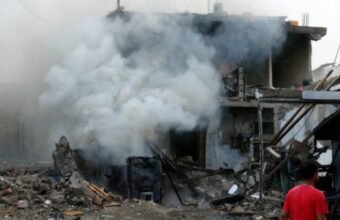











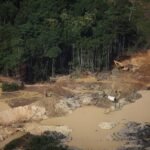







The assault took place in Mandeite village in Mambasa territory of Ituri province, about 165 kilometers southwest of the provincial capital, Bunia. Officials said many of the victims were artisanal gold miners working in the area when the attack occurred. Local administrator Janvier Kinyongi said the death toll remains provisional because reports of additional attacks were still emerging from nearby communities, making it difficult for rescue teams and security forces to fully assess the situation, News.Az reports.
Table Of Content
- Who were the victims of the latest attack?
- Who is believed to be behind the killings?
- What is the Allied Democratic Forces (ADF)?
- Why does the ADF continue to target civilians?
- Why is eastern Democratic Republic of Congo so vulnerable to armed groups?
- How serious is the humanitarian and security crisis?
- What is being done to stop the ADF?
***
The attack came only days after suspected ADF fighters reportedly abducted several people in the same region, raising concerns that the armed group is intensifying its operations in Ituri province. Residents in eastern Congo have become accustomed to living under the constant threat of violence, with attacks often taking place without warning in remote villages where government security is limited. The latest killings once again demonstrate the fragile security environment across eastern DRC, despite years of military operations aimed at dismantling armed groups operating in the region.
The incident also underscores the wider humanitarian crisis affecting eastern Congo. Continuous violence has forced millions of people to flee their homes, disrupted farming and mining activities, and left many communities dependent on humanitarian assistance. Human rights organizations have repeatedly warned that civilians remain the primary victims of the conflict, while authorities continue struggling to restore security across vast and difficult-to-control territories.
Who were the victims of the latest attack?
Local authorities said that many of those killed were artisanal gold miners, reflecting the dangerous conditions faced by people working in eastern Congo’s mineral-rich regions. Gold mining provides an important source of income for thousands of families in Ituri province, but many mining sites are located in isolated areas where armed groups frequently operate. Because security forces have only a limited presence in these regions, miners often become easy targets for attacks, robberies and kidnappings.
Officials have not yet released the identities of all the victims, and the number of casualties could increase as rescue teams gain access to surrounding villages. Some residents remain missing following the attack, while others fled into nearby forests to escape the violence. Humanitarian workers say fear and insecurity often delay rescue efforts because emergency teams cannot immediately enter areas where rebels may still be active.
The attack also highlights the broader impact of conflict on civilian populations. In addition to loss of life, such assaults destroy livelihoods, interrupt mining operations and discourage economic activity in already impoverished communities. Families who lose relatives are often left without their primary source of income, while survivors face ongoing psychological trauma and uncertainty. The repeated targeting of civilians has contributed to one of Africa’s largest displacement crises, with many communities forced to abandon their homes in search of safer areas.
Who is believed to be behind the killings?
Local officials believe the attack was carried out by the Allied Democratic Forces (ADF), one of the most active and dangerous armed groups operating in eastern Democratic Republic of Congo. Although the group has not officially claimed responsibility, the nature of the assault closely resembles previous ADF attacks carried out in Ituri and neighboring North Kivu province.
Security experts note that the ADF frequently targets isolated villages where government forces have only a limited presence. Fighters often launch surprise attacks before retreating into dense forests that provide natural protection from military pursuit. Such tactics have allowed the group to survive despite years of military pressure from both Congolese and Ugandan forces.
The latest attack follows reports that suspected ADF militants abducted several people in the same area only days earlier. Kidnappings have become one of the group’s common tactics, alongside killings, looting and attacks on civilian infrastructure. Human rights organizations say the rebels deliberately target vulnerable communities to spread fear, disrupt normal life and weaken confidence in the government’s ability to provide security.
Authorities continue investigating the incident while increasing military patrols across affected areas. However, security analysts warn that attacks are likely to continue unless broader efforts are made to strengthen governance, improve intelligence gathering and increase protection for civilians living in conflict-affected regions.
What is the Allied Democratic Forces (ADF)?
The Allied Democratic Forces, commonly known as the ADF, is an Islamist rebel movement that originated in Uganda during the 1990s. The group was initially formed by several factions opposed to the Ugandan government, but sustained military operations forced many of its fighters to relocate across the border into eastern Democratic Republic of Congo.
Over time, the ADF established bases in the dense forests of North Kivu and Ituri provinces, where difficult terrain and weak government control enabled it to survive repeated military offensives. The group gradually expanded its activities, becoming one of the region’s deadliest armed organizations through attacks on villages, kidnappings and massacres targeting civilians.
In recent years, the ADF has become affiliated with the Islamic State (ISIS/Daesh), which refers to the organization as part of its Central Africa Province. Although experts continue debating the exact operational relationship between ISIS leadership and the ADF, the affiliation has increased international concern over the conflict and encouraged greater regional counterterrorism cooperation.
The group finances its operations through illegal taxation, extortion, kidnapping for ransom, smuggling and activities linked to mineral-rich areas. Human rights organizations accuse the ADF of committing widespread atrocities, including killings, forced recruitment and attacks on schools, churches and health facilities. Today, the organization remains one of the greatest security threats facing civilians in eastern Democratic Republic of Congo.
Why does the ADF continue to target civilians?
According to Amnesty International and other human rights organizations, civilians have become the ADF’s primary targets over the past several years. While the group occasionally attacks military positions, most of its operations are directed against villages, farming communities and mining settlements where residents have little means of defending themselves.
One reason for these attacks is the need to obtain supplies. The ADF frequently loots food, medicine, fuel, livestock and money from communities to sustain its fighters operating in remote forest camps. Attacks on mining communities also provide opportunities to seize valuable resources and disrupt local economic activity.
Another important motive is retaliation. Researchers believe the group often targets villages suspected of cooperating with Congolese or Ugandan security forces. Communities located near military operations may become victims because insurgents believe local residents have shared intelligence with government authorities.
The ADF also uses violence to spread fear and maintain influence across rural areas. Large-scale attacks force thousands of civilians to flee, weakening government control and creating conditions in which armed groups can move more freely. Human rights organizations warn that repeated attacks against civilians may constitute war crimes and have called for greater accountability for those responsible.
Why is eastern Democratic Republic of Congo so vulnerable to armed groups?
Eastern Democratic Republic of Congo has experienced decades of conflict driven by political instability, ethnic tensions, weak governance and competition over valuable natural resources. The region contains significant deposits of gold, coltan, cobalt and other minerals that are highly sought after in global markets. Control over these resources has fueled violence among armed groups seeking financial gain.
The country’s vast forests, mountainous terrain and poor transport infrastructure also make it difficult for security forces to maintain a permanent presence across all affected areas. Many villages remain isolated and can only be reached after hours of travel, allowing armed groups to attack quickly before disappearing into remote areas.
In addition to geographical challenges, state institutions remain weak in many parts of eastern Congo. Limited access to education, healthcare, employment and public services has created conditions that enable armed groups to recruit members and expand their influence. Long-standing regional conflicts involving neighboring countries have further complicated efforts to stabilize the area.
Analysts estimate that more than 100 armed groups operate across eastern Congo, making the conflict one of the most complex security crises in Africa. While each group has different objectives, competition over territory and resources continues to fuel instability.
How serious is the humanitarian and security crisis?
The conflict in eastern Democratic Republic of Congo has produced one of the world’s largest humanitarian emergencies. Millions of people have been displaced from their homes, while many others remain trapped in areas affected by recurring violence. Humanitarian agencies struggle to deliver assistance because insecurity often prevents aid workers from reaching vulnerable communities.
According to the Kivu Security Tracker, the ADF killed 62 civilians and abducted 57 others in June alone, illustrating the continuing threat posed by the group. Beyond the ADF, numerous other armed organizations continue carrying out attacks that contribute to widespread insecurity throughout eastern Congo.
The violence has disrupted agriculture, mining, education and healthcare, leaving many communities without reliable sources of income or access to essential services. Children are particularly vulnerable, facing interrupted education, displacement and increased risks of recruitment by armed groups.
International organizations continue urging greater investment in civilian protection, humanitarian assistance and long-term development to address the root causes of conflict. Without lasting improvements in governance and security, experts warn that attacks like the latest massacre in Ituri province are likely to continue.
What is being done to stop the ADF?
The Democratic Republic of Congo and Uganda have been conducting joint military operations against the ADF since 2021 under Operation Shujaa. The campaign aims to destroy rebel camps, eliminate senior commanders and disrupt the group’s logistical networks through coordinated ground and air operations.
Military officials say the operations have succeeded in capturing or killing several ADF fighters and dismantling numerous bases. Nevertheless, the group has demonstrated a remarkable ability to adapt by dispersing into smaller units and relocating to remote forest areas where military access is limited.
Security experts argue that military operations alone will not eliminate the threat. They emphasize the importance of strengthening state institutions, improving intelligence sharing, expanding infrastructure and providing greater protection for civilians living in conflict-affected regions. Human rights organizations have also called for thorough investigations into attacks against civilians and greater accountability for those responsible.
Although joint operations have weakened parts of the ADF network, the latest attack illustrates that the organization remains capable of launching deadly assaults. Achieving lasting peace in eastern Democratic Republic of Congo will require not only continued security operations but also sustained political commitment, regional cooperation and long-term investment in economic development and governance.